

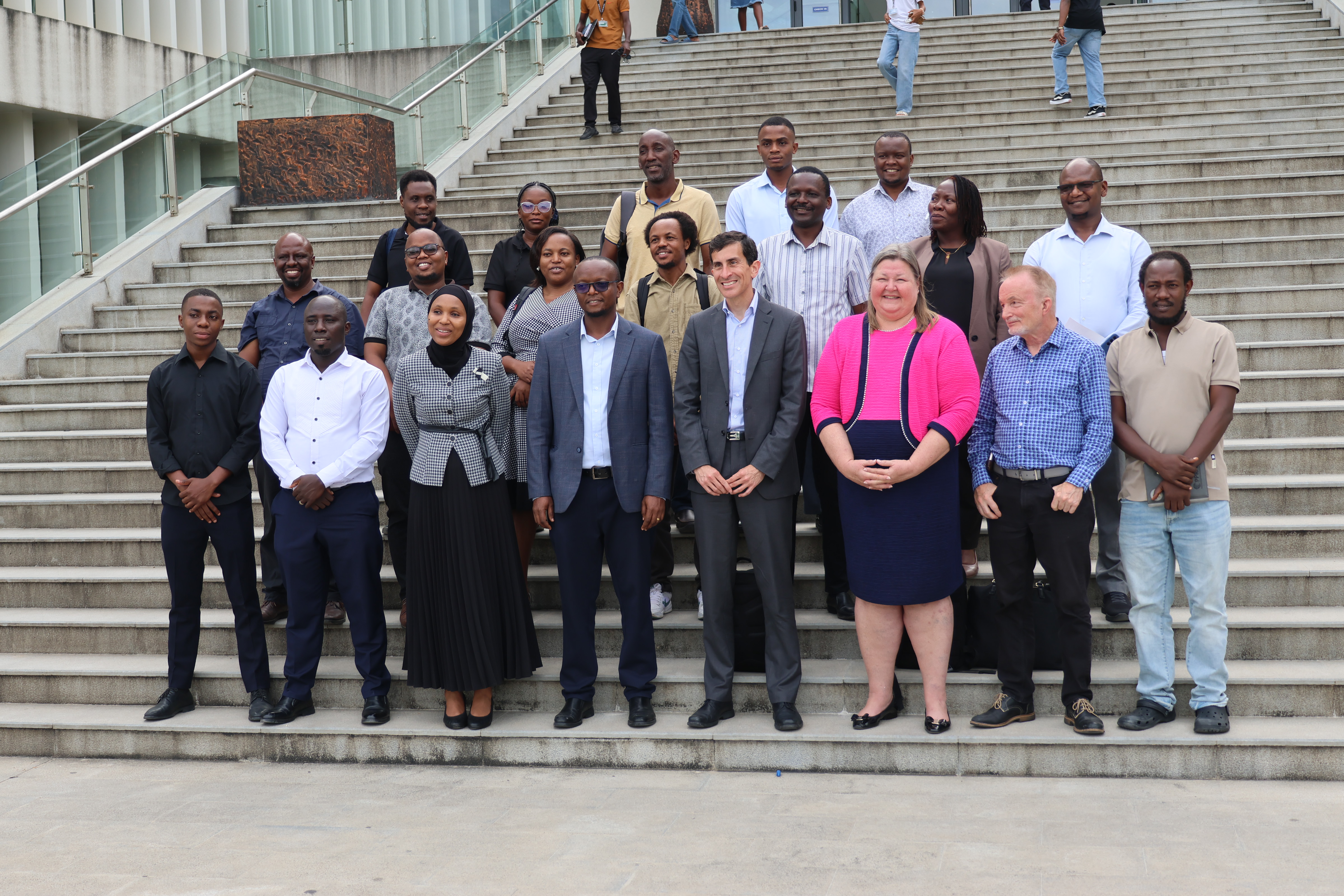
International Experts Lead Public Lecture on Ethical Use of Artificial Intelligence at CoICT
The College of Information and Communication Technologies (CoICT) of the University of Dar es Salaam successfully hosted a high-level public lecture on "Ethical Use of Artificial Intelligence: Policy, Governance and Responsible Innovation" on Monday, 15 June 2026, bringing together university leaders, academics, researchers, and administrative staff to discuss the opportunities and challenges associated with Artificial Intelligence (AI).
The event was graced by two distinguished international scholars: Prof. Daniel Castro, Vice President of the Information Technology and Innovation Foundation (ITIF) and Director of the Centre for Data Innovation, USA, and Prof. Milton Mueller of the Georgia Institute of Technology's School of Public Policy.
Engagement with CoICT Leadership and Innovation Ecosystem
Prior to the public lecture, the guests visited the CoICT Kijitonyama Campus, where they held discussions with the College Management and toured the College's innovation facilities, including technology hubs and laboratories. The visit provided an opportunity to showcase CoICT's contributions to digital innovation, research, entrepreneurship, and capacity building in Tanzania.
The delegation also paid a courtesy call to the dLab team, where discussions focused on emerging digital technologies, innovation ecosystems, and opportunities for collaboration in research and policy development.
Public Lecture Explores Ethical and Responsible AI
The public lecture commenced at the Mwalimu Julius Nyerere Mlimani Campus with opening remarks delivered by Dr. Godwin Mruma who reprented the Principal of CoICT, who welcomed participants and underscored the importance of fostering informed discussions on emerging technologies and their societal implications.
In his keynote presentation, "Ethical Use of AI: Policy, Governance and Responsible Innovation," Prof. Daniel Castro examined the rapid advancement of AI technologies and highlighted the need for robust governance frameworks that promote innovation while ensuring transparency, accountability, fairness, and public trust. He emphasized the role of institutions and policymakers in creating enabling environments that encourage responsible AI adoption.